Shop in my Suitcase (Chapter 2 – Firstfruits)

One never knows why God does what He does, but it is always a privilege to trust Him. It is encouraging to know that all things work together for our good, if we, as the “firstfruits”, remain rooted in Christ. The initial naïve sketches contained in this book were originally done more than 25 years ago as a series for Biblical stationery.
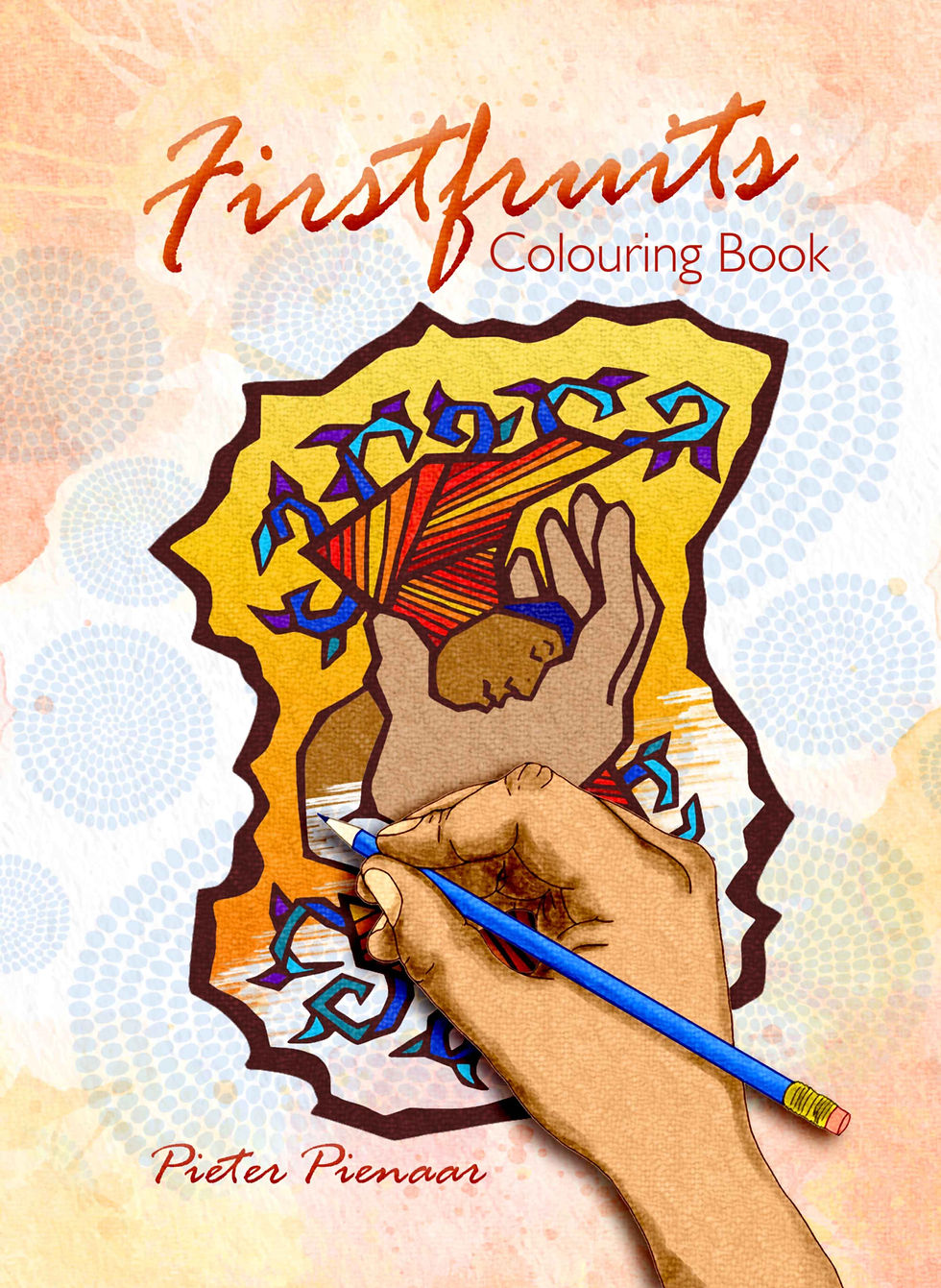
I have been an art teacher for more than two decades now and the advancement in more approachable and freer computer software made it possible for even me, who is not a graphic designer, to rework and complete these sketches in 2020 during the months of the COVID-19 outbreak and lockdown. In December 2019, my eyes fell on my collection of forgotten Biblical designs, and the colouring book idea was born. During March 2020 I felt it was my “duty” to see to it that this book was released and I loyally applied myself, because I have friends in China. I was an art teacher in Wuhan from August 2017 to June 2018 and this book is my humble “acknowledgement” that we cannot rely on ourselves; we need the Hand of God to protect us.

The two paragraphs you have just read, are on the cover of my Firstfruits Colouring Book which Groep 7 Publishers and I released in 2020. It contains a collection of Biblical illustrations of mine which I reworked. I am going to provide the link here, if you are interested in perhaps acquiring one. (Firstfruits Colouring Book – Pieter Pienaar | Groep7 eShop) This morning the nomad creative (and I am referring to myself) got up with the intention of writing this particular chapter. It dawned on me that I do have something to make things easier, which is the lengthy preface of my Firstfruits Colouring Book. So, without wasting more words which may deter the whole "congregation" from reading, I will copy and paste. If you have the stamina, keep on reading. (Perhaps I should offer a little jewel - to wear around the neck - for those who read until the end?)

Introduction
Written and compiled in Jeddah, Kingdom of Saudi Arabia,
during the outbreak
and lockdown of the Covid-19 pandemic,
from January to March 2020.
I was an art teacher in Wuhan, China,
from August 2017 to June 2018.
I decided to write a brief overview of the last 25 years of my artistic life as a Christian artist (or creative) in order to provide insight into the nature of these sketches or Biblical illustrations. I am an art teacher and not a fulltime artist and I enjoy creating art during the holiday seasons. I have been enjoying the privilege of being an art teacher for almost 22 years now and having taught the practical aspect of art making and art history (which includes analyzing art) I cannot help myself; I simply have to reflect (or “analyse”) and look at the inspirational source and development of my own Biblical illustrations over the course of two decades.

Before I continue, I feel I need to clarify the two labels, “Christian artist” and “creative”. Like so many artists in South Africa and other parts of the world, I am a born-again Christian believer who regards the Bible as “the light on my path” and who occasionally illustrates Scripture, but my art repertoire extends beyond what you see in this book. I am not stating this to appear aloof or to alert you to my other artistic interests (which most artists have), but simply to address the concept “Christian artist” as a coined concept from my personal perspective – which is wonderfully personal and partial, and perhaps not as neutral as I would like it to be, as you will see. May you hear my heart as I tell my tale. I am talking about these issues because I realise that I would in no way satisfy or please even a segment of the Body of Christ, simply because there are countless denominations and perspectives and wherever I position myself, it will be problematic. So, I am going to place myself somewhere in this denominational field “problematically” so that the reader may know my vantage point and hopefully allow me a few liberties as a result of my stance.
In my journey through various church denominations over the years I have seen conservative people who are not themselves within the visual arena meaning well, and sincerely wanting their brothers and sisters – the “Christian artists” – to be just producing “Christian Art” per se, and I have seen the more open-minded prophetic or charismatically-minded churchgoers on the other hand who are bestowing a too prominent place to creative exploits done by the Christian artists within their circle to such an extent that those who are not within that particular “herd” cannot relate to the “anointing” that is apparently related to a work of art or a creative construct.

I know I am simplifying polarizing “perceptions” of art in Protestant church circles to the extreme and please allow me this error. Once I heard a preacher who said, “Too much Word and we dry up and too much Spirit and we blow up,” and I think we have to find a role for art and the artist in the church between the “dry up” and the “blow up”, which is perhaps the safest stance; hopefully the reader may nod in agreement. So, ideally, therefore I would advocate a position in the middle of these two poles.

However, a balanced stance may not be what God would choose as we have often seen. Therefore, let us just acknowledge and regard the “Divine reality” perhaps, just to underline the fact that I may, in fact, be completely wrong in trying to find a safe or balanced position for my perspective. Let us just take some time out and think about the marvellous testimonies of dear brothers and sisters in the Lord and who saw God’s hand in action or who felt His touch in their hearts and lives at unexpected places. And when we regard the methods or the messengers God employed, we are often shocked, because His ways are not our ways. What I am trying to say is this: We have to be informed but we should not disregard Jesus’ prompt of being childlike. God can speak to us any way He wants to and if He chooses to bypass our heads to get to our hearts, He is at liberty to walk right in. God can use art, He can use a dream, He can use a non-believer, He can use the newspaper, because He is the Author of life and the Creator of each one of us and He knows what will touch our hearts individually.

Let us look at the labels. The term “Christian artist” may be stifling to some Christians who happen to be artists too, I believe. I am of the school of thought which states: I am a Christian and I am an artist too, but I am inspired by a variety of (visual and auditory) sources and the Bible – which I live by – is only one of the sources, and not the only source from which I derive inspiration for the variety of art works I create. However, in this colouring book the reader will see a collection of illustrations which is based on, or rooted in, Scripture in its entirety.

A dear brother or sister in the Lord may want to oppose my above-mentioned statement and opt for a “super-spiritual” perspective (as some may call it), one that states that everything is ultimately linked to God, and the Bible is therefore indirectly the Christian artist’s only inspiration, and that someone would not be wrong. As a churchgoer I have participated in many debates in conservative and more relaxed approaches and I simply want the reader, and those who may feel uncomfortable with art in general, to understand that Christian artists (as I have experienced, and I am speaking for myself only) are at times struggling to present themselves in religious settings, because of preconceived notions naturally prevalent in all denominations for the protection of that particular religious circle.

I just want to put it out there for the Christian community to know that because as devout Protestant, Pentecostal and Charismatic Christians in general we tend to be very literal or conservative in our interpretation of a “godly life” alongside Biblical guidelines, which is completely fair and desirable; the prospects for Christian artists or creatives may occasionally look bleak and they may retreat and choose not to contribute their offering to the congregation because of a lack of a welcoming “embrace”.

Sometimes an artist could experience rejection, and it could be attributed simply to his or her chosen artistic style and not to subversive subject matter at all. The audience may not understand why an artist draws or paints in a certain way to get a message across. I will not wander further along this path because there are too many variables. Suffice it to say: At times the “vehicle” an artist chooses to get a good message across could be met with apprehension because of a too conservative church approach and a lack of curiosity on the part of the church community.

I just want to come to the defense of the conservative churchgoer (or “anti-art-agent”) here and admit that some artists, as we have seen in the course of art history, especially during the sixties and seventies, deliberately made works which angered the church and governments. So, the fear which some church communities may have for the “weirdoes” may stem from those memories and to an extent it is completely justified. However, I trust that the reader will understand my heart here and know that I am not telling the body of believers to embrace artists who are belittling the Gospel.

Let us look at the other label: “creative”. It has come to my attention that this wonderful word is used more frequently nowadays, and it could even be a better word than “artist” or even “designer”. Perhaps the word artist is too loaded and attached to an exclusive category of people. However, I am of the opinion that we are all indeed creatives these days, even if we don’t think so, because smart phones put art or creativity into the hands of most people, whether they have regarded themselves before as creatives or not. Some people who had bad experiences with art at school, for example, I am sure are currently having a blast fixing photos with filters and changing people’s faces with humorous applications. Let us leave this label “treatise” and simply enjoy the inclusive reality of contemporary smart phone creativity in the 2020s.

Let me get back to the imagery in this Biblical colouring book. As a South African citizen and creative it is impossible not to be influenced by the African landscape and its people. All South Africans who are art conscious must be aware of the contribution someone like the self-taught Belgian-born (Catholic) priest Frans Claerhout, who lived near Thaba Nchu in the Orange Free State, made to our South African art heritage. I mention him simply because you may see a similar sentiment in my naïve pastel works.

My African-style works may not look that unique to the (South African) reader in fact, because my works echo elements of the works produced by African sculptors, textile printers and crafters. However, I did not purposefully intend to copy any of the aforementioned but, as we know, an artist is influenced by his or her milieu and a style is formed and shaped as the artist experiments.

I do not see myself as an artist who has the gift of drawing figures from memory, simply because I do not have such a vast visual memory bank to draw from. There are amazing artists who can do illustrations very well without any visual references, but I fall short in that category. However, early in the 1990s I had the privilege of taking a four-month break from teaching and I wanted to create some figurative art that was simple and that I could design without visual references.

Intuitively I started to draw upon my African heritage, and my images were perhaps “crude” to myself but the medium which I used, namely soft pastels, awakened a curiosity in me with regards to the blending possibilities so I explored this naïve genre, and I got better at it over time. My aim was to create a work that had a distinctive “mood” or to be more precise a “feeling of warmth” obtained by using as few visual elements as possible. For example, I did not include ears in my pastel drawings and I just wanted to use the head, arm and hand with an additional element to complete the design. Please bear with me because the link between these works and the colouring book illustrations will become clearer in a moment. I started to enjoy the freedom that this naïve style provided, because these designs are not complicated (to me) and my imagination or visual memory bank could handle the output required.

So, how did I end up doing pen and ink designs which reflect the same sentiments? Well, it all started in 1994 when I enrolled for a course with an organization, Youth With A Mission (YWAM). We had an outreach planned and each person had to think of small ways in which to ease the financial burden. I decided to illustrate some Bible verses and then copy them onto card to sell as little packs to raise some money for our trip. The first works were done with very fine lines and I believe they were over-intricate – because I wanted to say too much perhaps – but over time (a period of about 5 years, 1994–1999) I refined and redesigned the sketches to include bolder lines; final alterations were made in 2020.

I can say my naïve African (stationery) style was eventually replaced with a more “surf”-style appearance, which was what I had in mind; I wanted to print t-shirts, but it did not prove to be a viable avenue at the time and I did not have sufficient funds to explore it further. However, as stationery packs the naïve and surf-style designs were welcomed with open arms and I think I must have sold over three hundred or more packs of these designs as greeting cards. During that time, late 1990s and early 2000s, my computer skills (and technology perhaps) were not that good, and I had to rely on the old-fashioned paper and glue stick, photocopying and Tippex or White-out layout techniques to create my designs and packaging material. For the purpose of brevity, I will summarise the development of my stationery period in six steps visually, which spans almost two and a half decades, as you can see in the progression of Psalm 18:35 below.
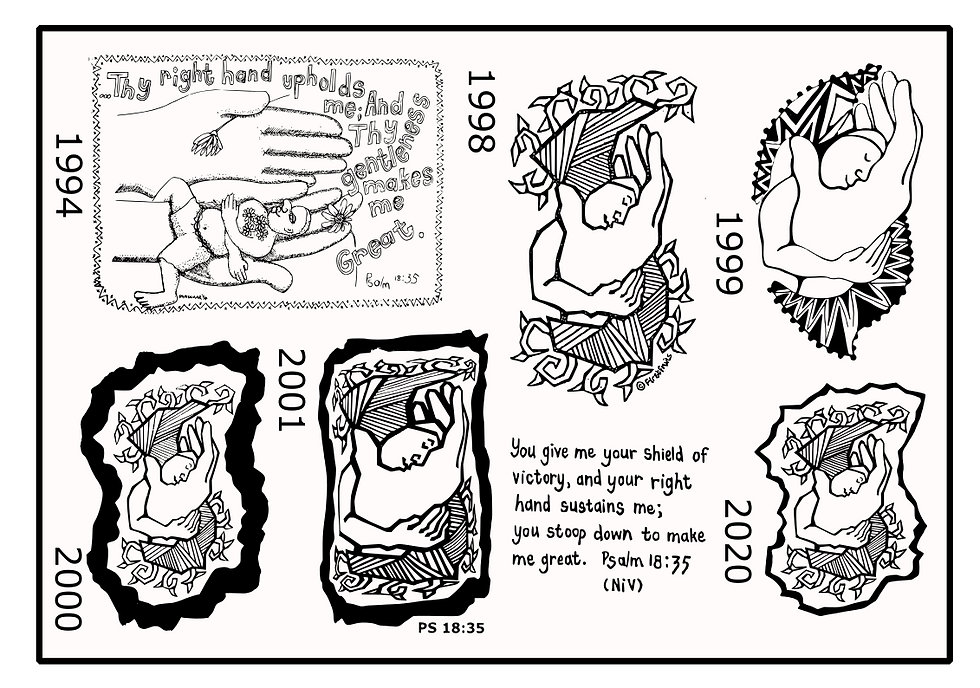
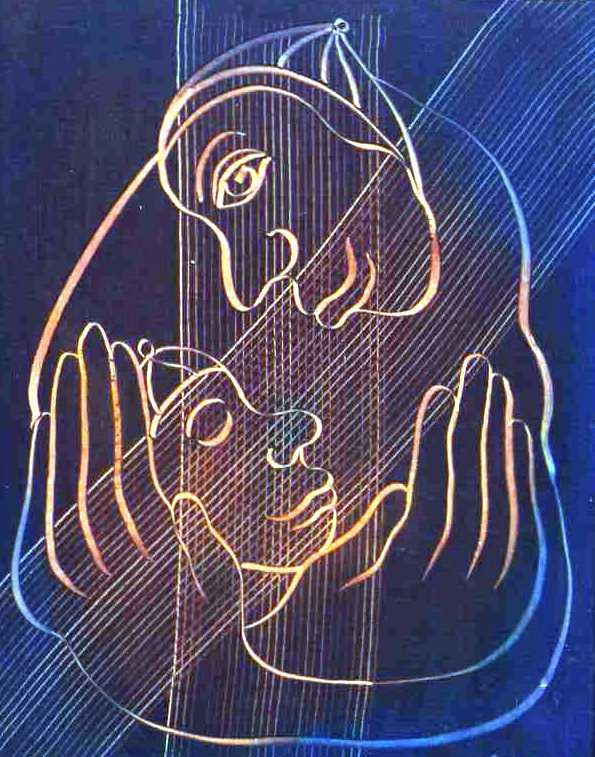
The large hand in most of these sketches represents the hand of God. Having made so many naïve works in soft pastels where the hand is a prominent part, I suppose, making the hand a prominent part again, was to be expected. I did not want to use the cross or a dove as key motifs because the verses I chose span both the Old and the New Testaments. I recently showed a few of these sketches to a colleague who is not a Christian – he adheres to another religion – and he told me that these sketches could be used for other religions too. I am not an imagery expert and I do not know how other devotees will regard these illustrations of mine, but I used the Bible as my source of inspiration as I mentioned earlier on and, in the Bible, we have a number of verses which speak about the mighty hand of God. I will mention just three verses, and I will use the New International Version.

Job 12:9-10 Which of all these does not know that the hand of the LORD has done this? In his hand is the life of every creature and the breath of all mankind.
Psalm 89:13 Your arm is endowed with power: your hand is strong, your right hand exalted.
Isaiah 41:10 So do not fear, for I am with you; do not be dismayed, for I am your God. I will strengthen you and help you; I will uphold you with my righteous right hand.
So, how did the colouring book patterns happen? At heart I am an abstract expressionist, who enjoys the colourful process of scraping and manipulating oil paint on canvas in order to arrive at a unique construct that did not exist before. My abstract painting process, I think, is something like spontaneous visual mathematics. Over the years I have created quite a number of abstract art collections, and I just felt that I should explore patterns so that I can use all these images I had on my computer. This is a wonderful time in history for creatives, because one can print anything on any surface these days and I think my interest was woken by the digital printing possibilities.

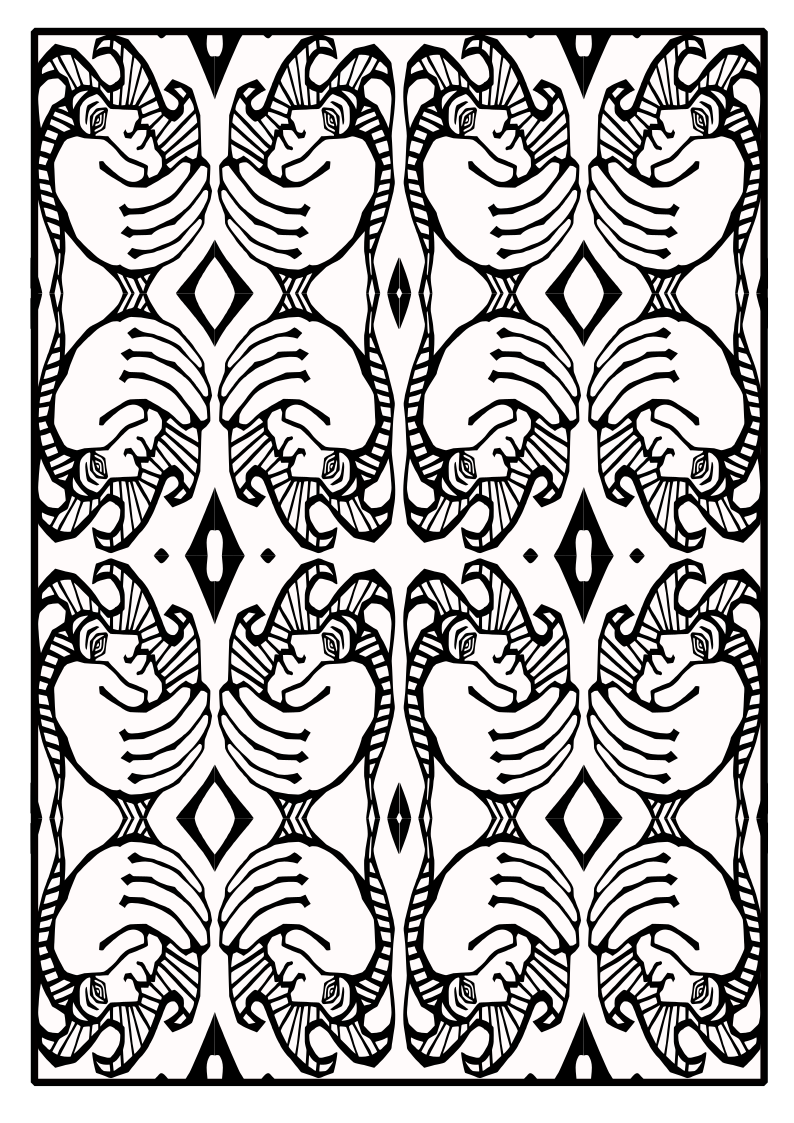
During June of 2019 I took a bus trip from Kuruman to Worcester to present a week-long course on art and recycling to a group of kindergarten teachers in the Western Cape and on my homebound journey I visited family and friends in Bloemfontein for a few days. My cousin’s husband, who is an IT professional, asked me why I was so despondent about all these graphic design issues after I had told him about my frustration and my lack of graphic design knowledge; he introduced me to Inkscape, which is free software that can assist anyone to create patterns and beautiful layouts, similar to what you can do with Photoshop I understood. He downloaded the software on my laptop, ticked all the right boxes and with the help of YouTube tutorials, I was able to figure out how to use the functions I needed to create basic repeats using the images derived from my own work, such as the one below.
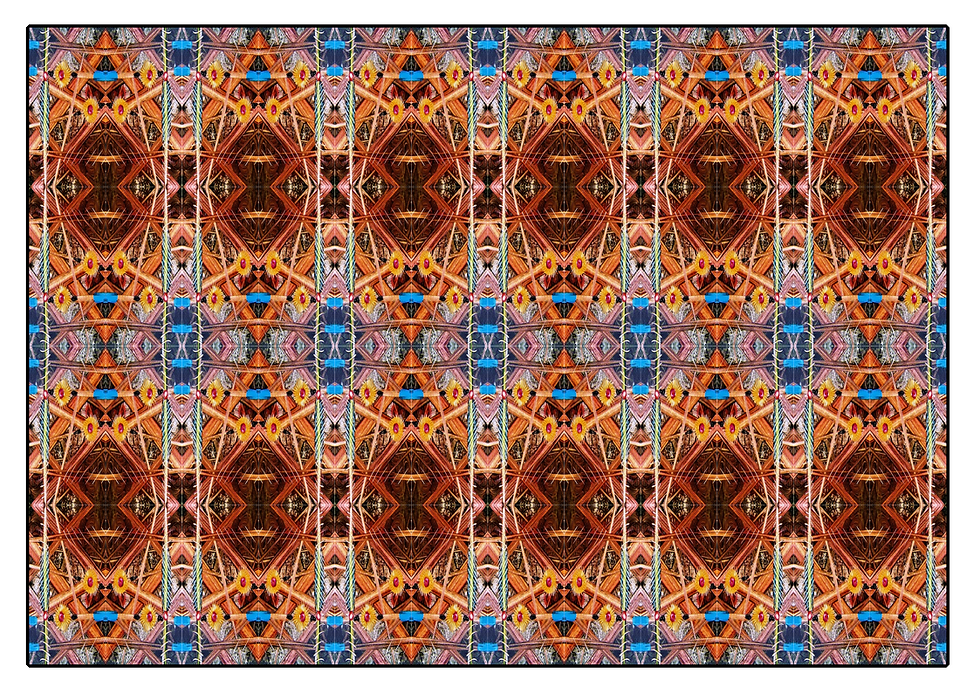
In December 2019, as I was organising my private little art world, I came upon my collection of twenty pen and ink sketches and I had an idea; I should rework them and turn them into patterns too and then publish a Biblical reflective or mindfulness colouring book for adults. Inkscape came to my rescue again and for the following three months I knew what I had to do with my free time.

So, in broad strokes dotted with a dash of detail here and there, that is how this book came to be. Now that you have this background regarding the nature of the art works contained in this book, we can address further issues, such as my interest in mindfulness and the benefits we can experience when we create something.

I started teaching art to primary school students in 1998 and within the course of my first two years of doing colourful “exploits” I became very interested in the behavioural changes I saw in the students, and this triggered my dormant interest in art therapy. Let me explain it a bit better. I noticed that some students, when they arrived at the start of the lesson at the art room, were rather unhappy and even frustrated for a variety of reasons (maybe some were “angry” they had to do art, tongue-in-cheek here), but when they left the art room at the end of the lesson they were smiling, happy and they looked different. Let me just pause here: It was not because of my personality or my “exceptional” lessons, because I observed this pattern of behavioural change across the grades over an extended period.
I have always had an interest in art therapy, so this observation made it bolder in my mind. I started to investigate my art therapy training options in South Africa and at the end of the 1990s there was simply no possibility to pursue academic training in this field. I wrote to a few overseas universities and when I saw the cost of studying art therapy overseas, I put a full stop next to that notion. I looked at local alternatives which would allow me an opportunity to get as close as possible to my art therapy interest. I discovered the University of Pretoria offered a part-time degree course in Learning Support, Guidance and Counselling, and for the next nine years I would apply myself and I obtained my doctorate in September 2008, focusing on the arts therapies (but I could not, and would not, become a licensed art therapist in South Africa, but I obtained the insight I desired). As I progressed from one degree to the next my focus changed from art therapy to arts therapies.

Seeing that I am not a therapist, even though I gleaned from the arts therapy literature during the course of my studies, it may be safer to see the collection of arts therapies as healing arts, as a friend aptly pointed out. This is not an academic paper, and things can get very tricky and as I have stated above; I am not an art therapist, but a qualified educational counsellor. In South Africa, as a result of my studies, I am a narrative therapist who could employ the arts to help people tell their stories, but I have not fulfilled that role yet, and I could be a registered member with the Counselling Board, as I understood years ago.

As I studied the literature I came to realise that art therapy as a single modality was simply too limiting for my interests because I, like most all other people, derive joy from more than one hobby or interest. I had to include other art forms in order to put all my arts-interests under this umbrella; I had dramatic arts training, I am an amateur musician, I completed a 3-month fulltime video-production course and I am a writer. Please forgive me if all this sounds conceited, but please hear my heart: I wanted to consolidate, or harness, these interests while I was studying the academic literature, because the doors were opening up in my mind and I saw these individual modalities could be combined as the literature revealed.

So, all these interests of mine compelled me to study the “entire” scope of the arts therapies (or healing arts) available all over the world at that point in time (2004 – 2009) to see what the common denominators are or were. I looked at a vast range: singing therapy, poetry therapy, sand play therapy, collage therapy, art therapy, video therapy, drama therapy, photo therapy and music therapy. I am sure I have omitted a few, but this was just to alert you to the reality of what is out there.

So, how did I tie it all together in my research? I looked at activities I found in the literature and I selected and adapted the ones I thought one could do at high school level for the purpose of educational counselling (or life skills or life orientation) and then ran a two-month programme to investigate the effect of these narrative arts activities on the self-concepts of the students. I will not bore you with more detail right now, but I want to bring the benefits of being active – artistically – to your attention. These benefits that I will mention in a paraphrased way, I gleaned from the literature during the course of my postgraduate studies and of which I became “visually” aware of as my students were engaged and changed in the art room, as I mentioned a few paragraphs earlier.
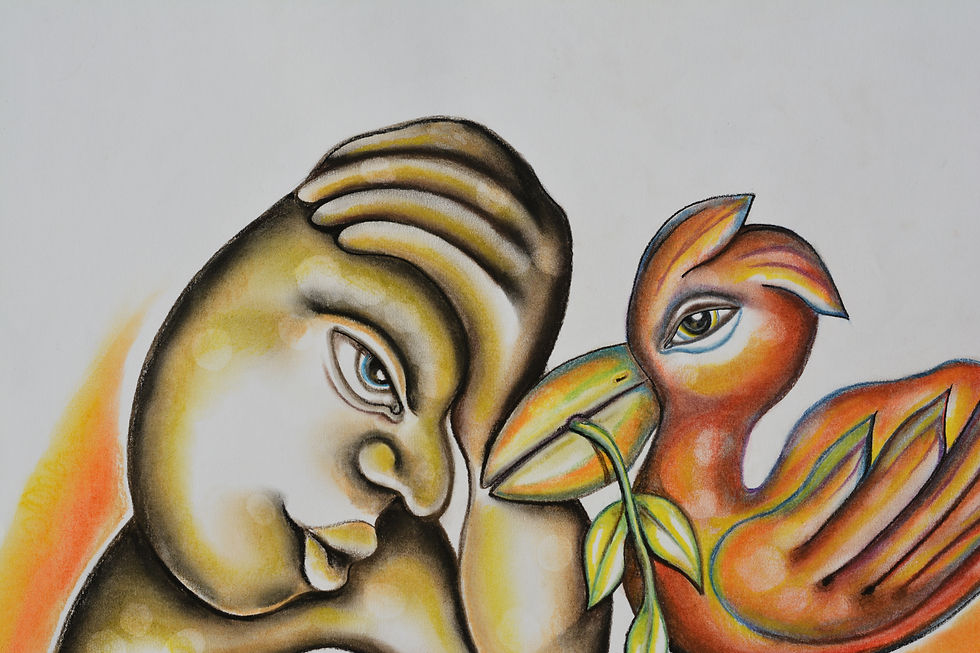
Just keep in mind that the benefits refer to the arts (plural) and not just art (singular). Here are a handful of simplified benefits we may encounter when we are engaged creatively: a cathartic experience which may awaken new spiritual paths within us, healing of sad memories may occur, metaphors and symbols emerge with which we can address unresolved issues, the attainment of a higher level of self-knowledge may be achieved and we may become conscious of unconscious issues. If one were to read about the arts therapies one will encounter different versions of what I have paraphrased here but that is more or less the essence as I remember it.

I discovered a little soft pastel sketch which I made in 1991, of Psalm 121, when I was teaching English in Worcester. May we all return to the Source of our Hope during this time.

Psalm 121 (A song of ascents.)
I lift up my eyes to the mountains - where does my help come from?
My help comes from the Lord, the Maker of heaven and earth.
He will not let your foot slip - he who watches over you will not slumber;
Indeed, he who watches over Israel will neither slumber nor sleep.
The Lord watches over you - the Lord is your shade at your right hand; the sun will not harm you by day, nor the moon by night.
The Lord will keep you from all harm - he will watch over your life; the Lord will watch over you coming and going both now and forevermore.

Let me return to the purpose of this book. I wish I could assure you that you would be blessed and that you would soar on the wings of self-knowledge and that you would be “healed”, but as you hopefully would know, I cannot. This is foremost for people who enjoy colouring in, but a colouring book with a slight difference (I hope), and if you have time and feel up to a challenge occasionally, you may experience an element of the benefits I mentioned in the previous paragraph. There are 20 core designs from which the patterns are derived. I included an empty page with the verse indicated at the bottom, so there is room for personalised designs and an opportunity for meditation or mindfulness.
(Please remember that all crafters, dressmakers, cake decorators, chefs, hair stylists and all the others that I have failed to mention are included in the creative category, so feel accepted and appreciated.)

I think I have said enough. I trust you will enjoy using this book and that you will understand the colourful messages which will arrive at your heart’s door and that you will see the Hand of God at work in your life as you live and love. Be blessed. (P. A. Pienaar March 2021)
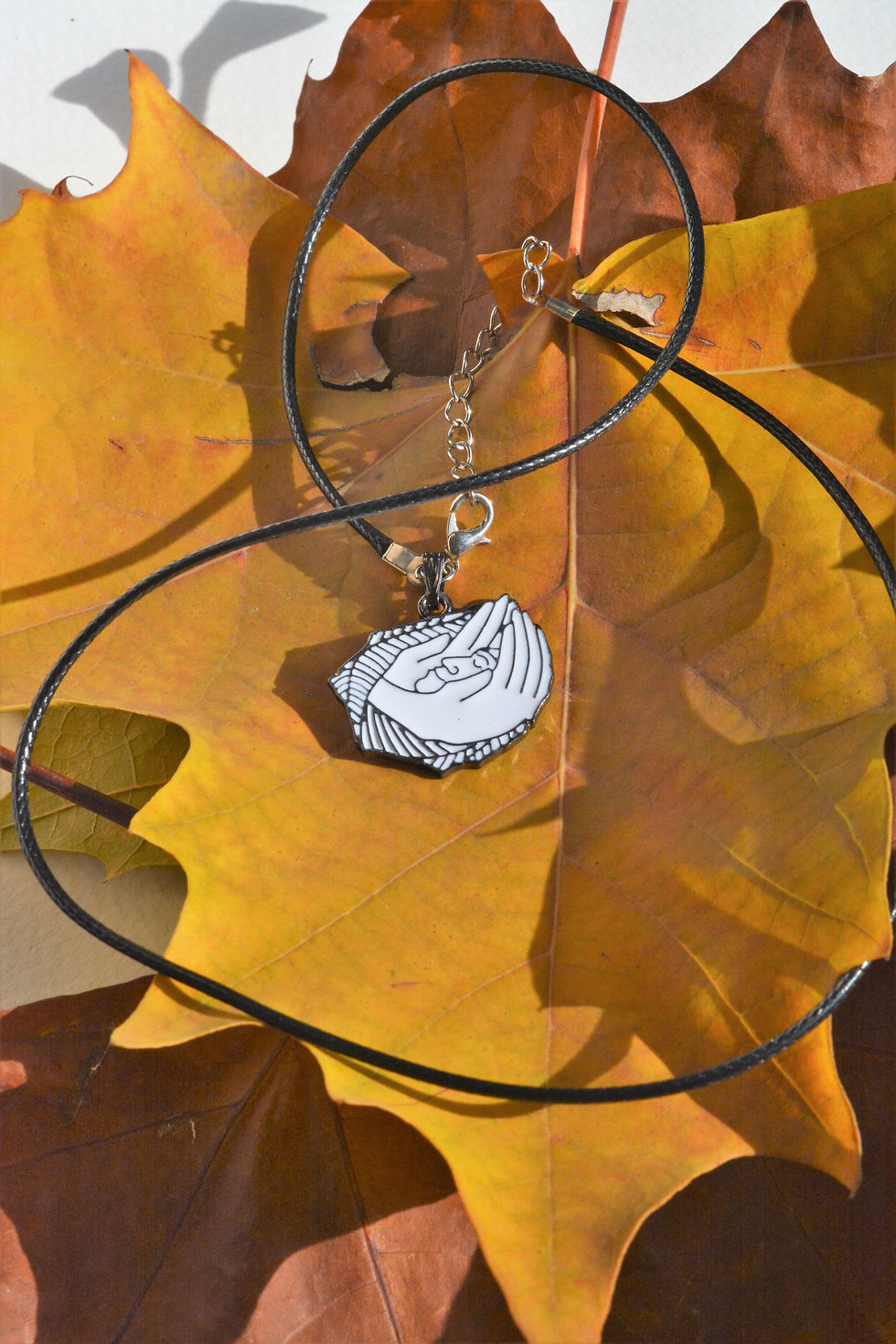
The images contained in this colouring book where initially printed as greeting cards. In 2015 I printed some of them on textiles and in 2017 I started with a jewelry range. However, I am not a good marketer yet and my ventures all came to a halt, but I believe as I said in the introduction, God has a plan and not everything has to be monetised. He is looking at our hearts, and He must be glorified even if our attempts do not produce the fruits we had hoped for.

I was very happy with the outcome, but I struggled to sell my wares due to my nomadic observer stance and my marketing skills which are not up to standard perhaps? I believe, one still needs a literal shop where people can see, feel and interact with the wares. Be it as it may, it was wonderful to see my designs on textiles and bespoke jewelry items. I am providing a few links to my YouTube videos I made which will tell the stories of the textiles and the jewelry with greater heartfelt focus, I trust.
If you have read everything and perhaps even opened a video link, I must congratulate you. Remember, there is art in your heart.
(Please note that most of what you read here, I wrote in 2020.)


Comments